Exploring Color Relationships on a Short Film
When planing the visual style for Justin Kumiega’s short “Late House” it was clear that Justin wanted to experiment with color relationships in our compositions. Though we didn’t have the budget to set the film in the 60s, Justin still wanted the film to feel classical. Color quickly emerged as the most powerful storytelling tool we could use in the film. I drew inspiration from films like “LaLaLand” and “In the Mood For Love”, but most notably Peter Greenaway’s “The Cook, the Thief, His Wife and Her Lover” shot by Sacha Vierny. The film boldly uses color to reflect changes in mood, characters, drama, and suspense. Often characters will walk into a new room inexplicably wearing a completely different color despite no diegetic time passing.
“Late House” is about a famous actress who’s forgotten her fame and slowly uncovers the truth of who she is. In a nod to Greenaway, we chose to inexplicably change the color of Fiona’s dress to reflect her progression to discovering her past. With careful curation of color paletes in the mise en scene and costume design, the changing of dress colors informs the audience on Fiona’s relationship to her environment. For Example:
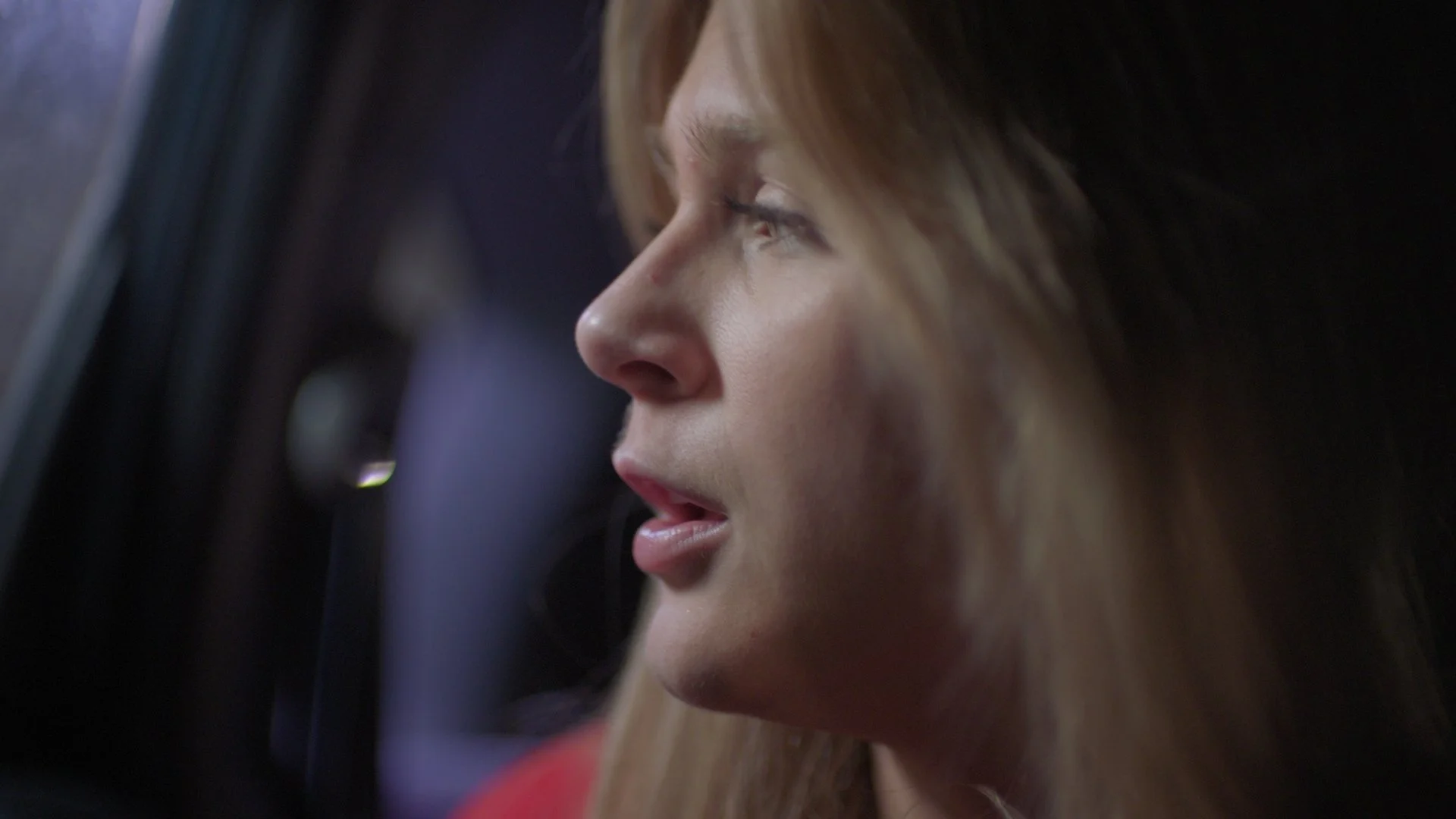
Purple often symbolizes magic, royalty, and elegance, but in our use case we wanted it to symbolize confusion, enlightenment, and mystery. In the back of a taxi with a chatty driver, Fiona is slowly recognized as her famous self. The scene starts with a muted palette - save for her red dress - and gradually becomes more purple throughout as the conversation with the taxi driver continues.
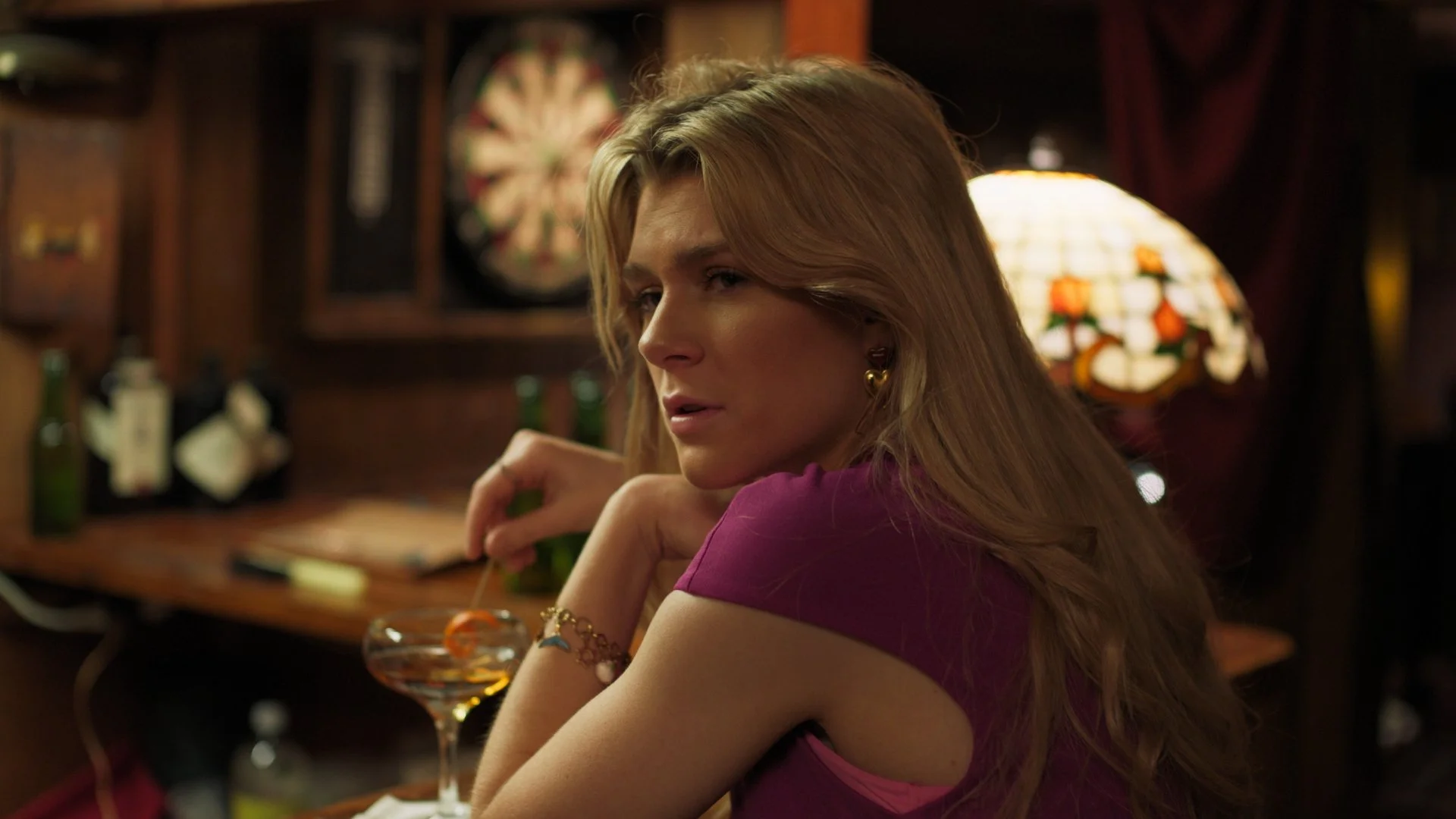
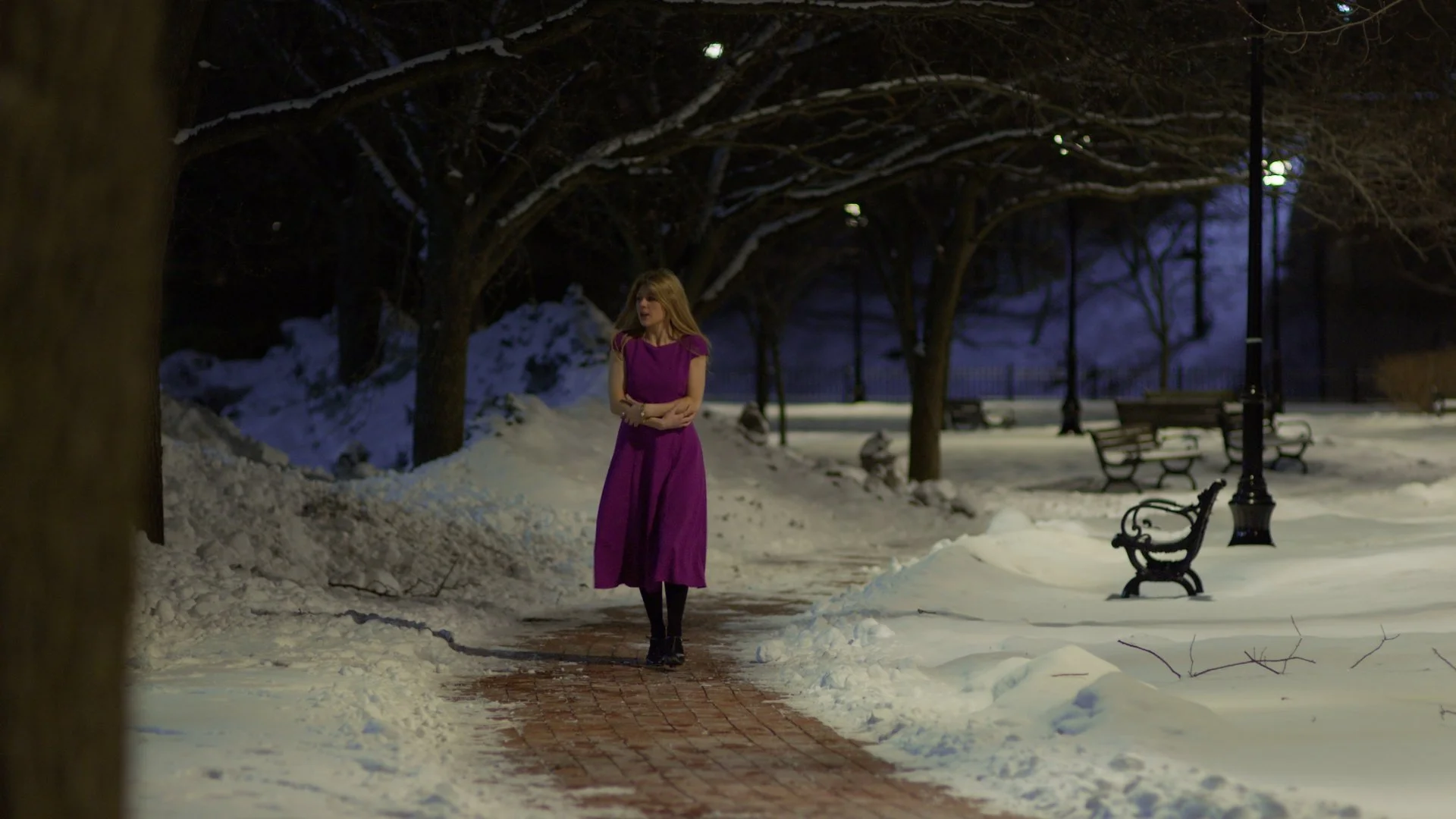
Fiona flees into the street, now wearing a purple dress. She is fully surrounded by purple, reflecting her confusion. With color grading and lighting accents, we were able to incorporate purple strongly into the final compositions. Over the course of the walk, the atmosphere begins to turn warmer until she arrives at the bar. The warmth slowly harmonizes to her purple dress, signaling an emergence from her state of mind.
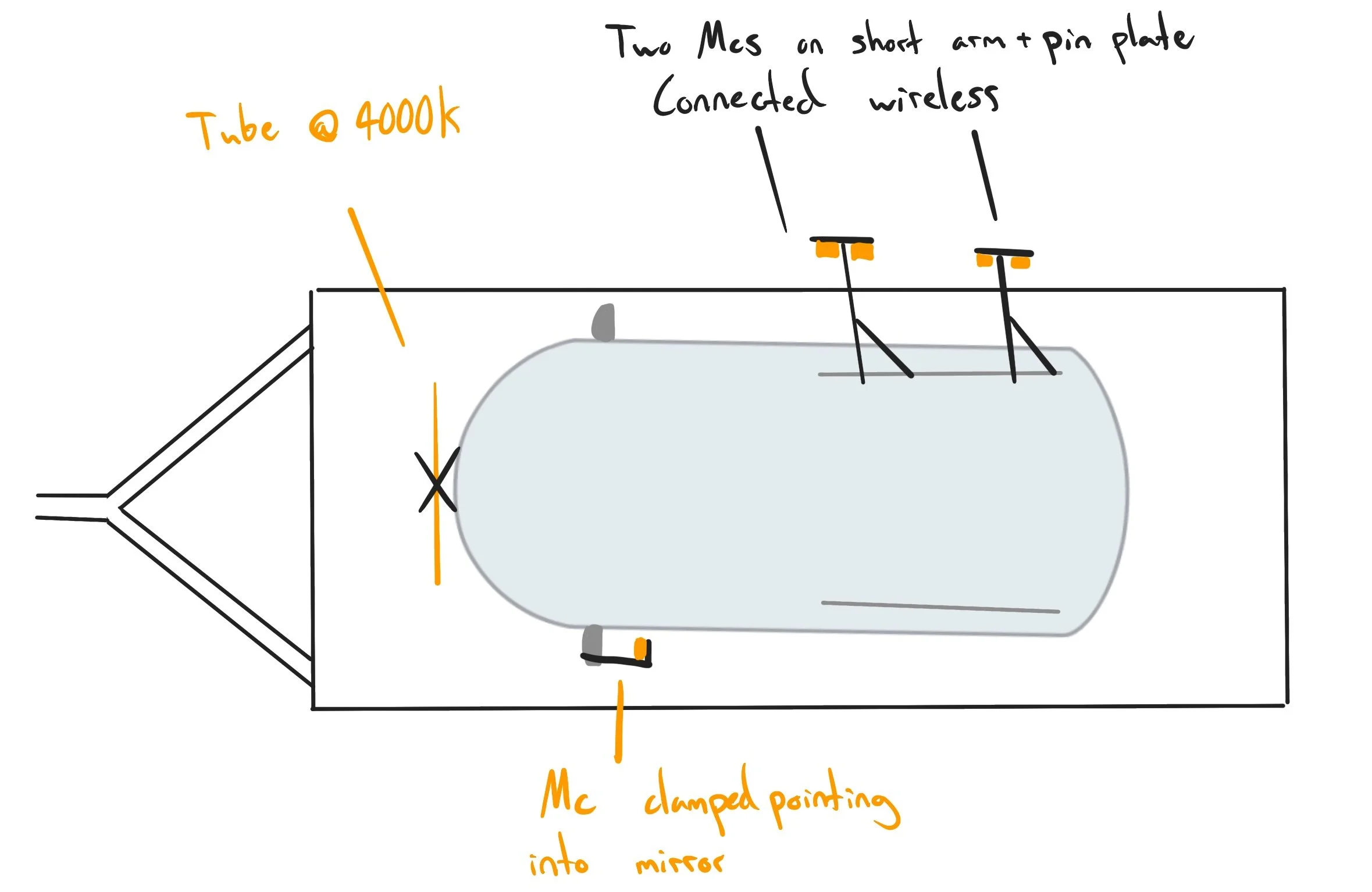
Picture Car Rigging Plan
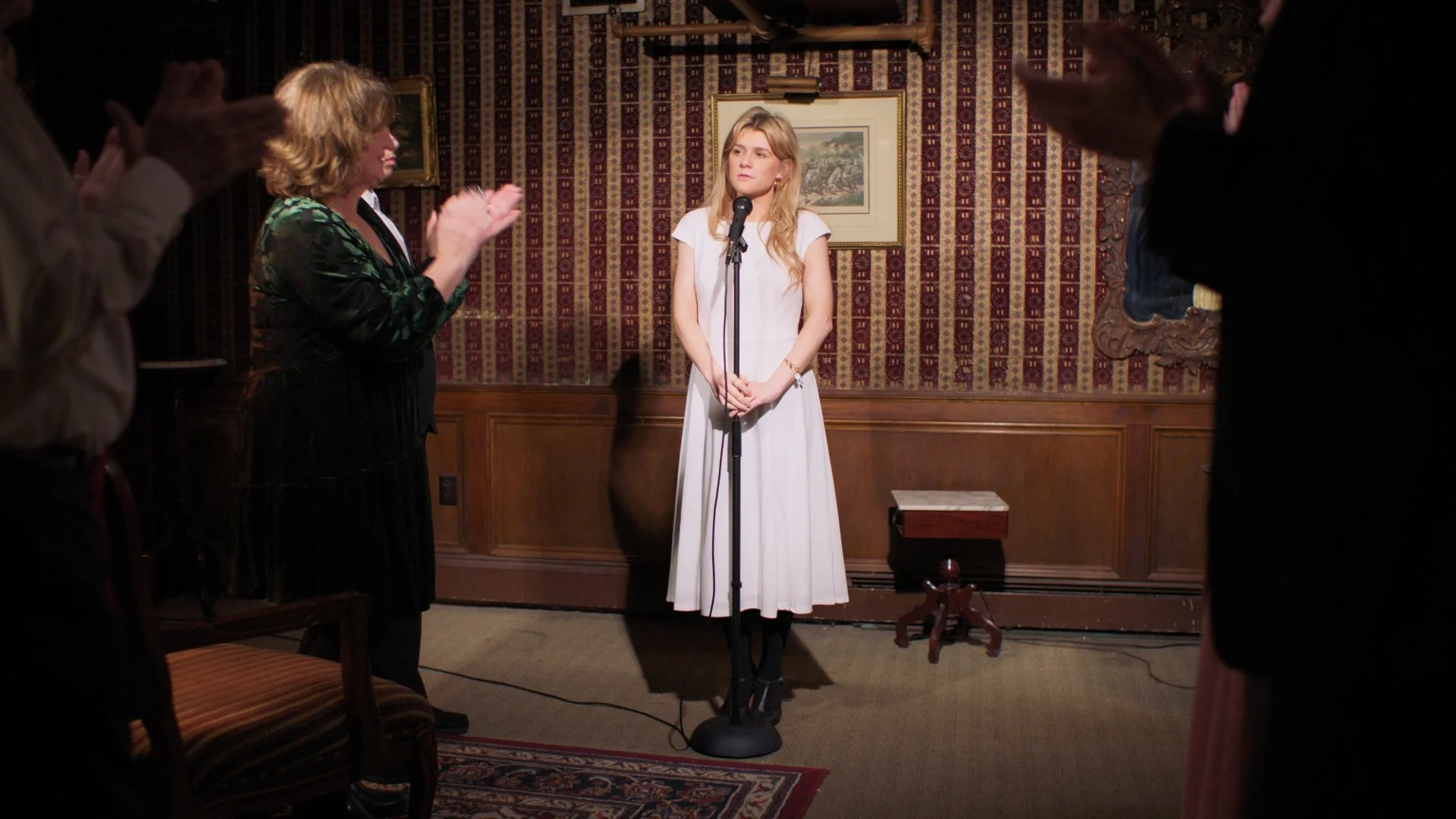
Fiona starts one of the final scenes in the bar with the purple dress on. The location is covered in red from the wallpaper to the decorations. In a split analogous color scheme, the reddish gold is complimented by the green set decoration and the purple of Fiona’s dress. Rick, another character who befriends Fiona and offers her safe haven, wears a green shawl in keeping with the color scheme.
As Fiona delivers a monologue to the crowd, the camera slowly creeps in towards her before moving out to reveal a white dress. The white now re-contextualizes Fiona’s place in her environment. Instead of harmoniously existing in the purple, the white dress against the red location evokes different feelings. I wanted her to feel like a sheep amongst wolves, drawing on the biblical importance of red and white. Ultimately a film about fame and exploitation, this contrast paints a strong picture of Fiona’s relationship to her surroundings.
We repeated these tricks throughout the film to tell a story within a story - one that may be harder to spot but subconsciously delivers information to the viewer. It provided a new and exciting challenge that I found very rewarding. It encouraged my collaboration with art department as I would ask for hints of certain colors in the scene, and the increased attention to color meant a more meticulous workflow balancing color temperatures of lights. I will carry these principles to future projects as I continue to grow my understanding of color science.