How We Shot a Horror Short in Sub-Zero Temps
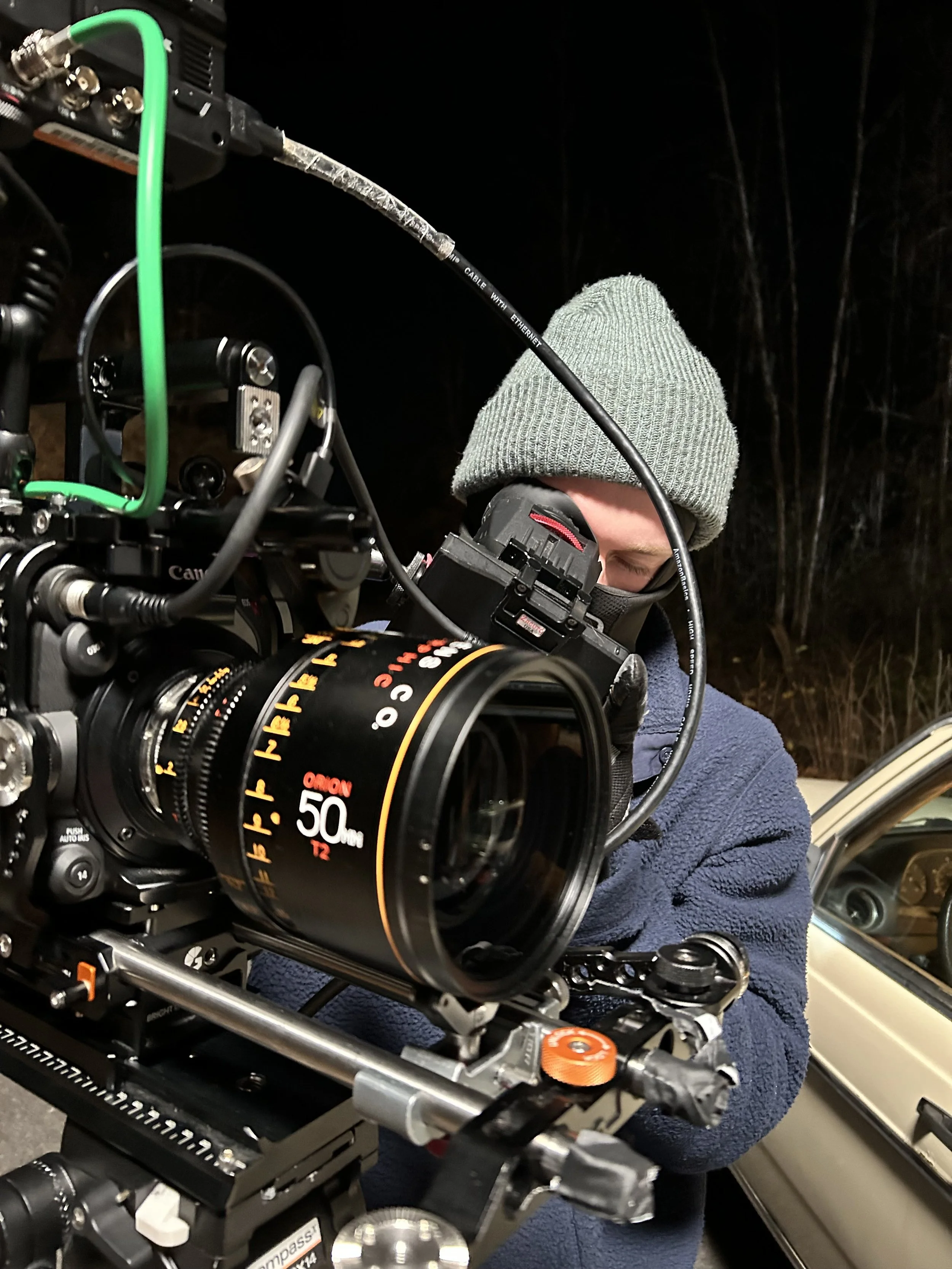
When director and close collaborator Andrew Buzby came to me with this film I recognized the opportunity to try something very different but also the immense challenge we would face in doing so. The short would rely heavily on VFX to create a CG monster as the drama unfolded into a frightening, almost psychedelic sequence of events. Keeping our shooting style consistent with his vision for the VFX was a new and daunting challenge. Buzby and I decided anamorphic was the right look for the film, so we set out finding a lens set that matched our needs. We landed on the Atlas Orion Anamorphics used to shoot movies like Babylon and parts of Anora. I thought shooting the entire film on a 50mm would give us a uniquely grounded feeling, something we felt was important for building suspense in the story. There is something human about the 50.

The Orion, with a squeeze factor of 2x, working in tandem with a Canon C300 Mkiii gave us an image equivalent to 32:9 as seen above - a little wide for our tastes. This we later cropped to 2.39:1, but the anamorphic characteristics of the extremely wide de-squeeze remained. Edges became very soft, especially under tungsten light, and the loss in resolution provided smooth falloff in the textures. Shooting C-Raw gave us the data we needed to manipulate the moonlight in post.
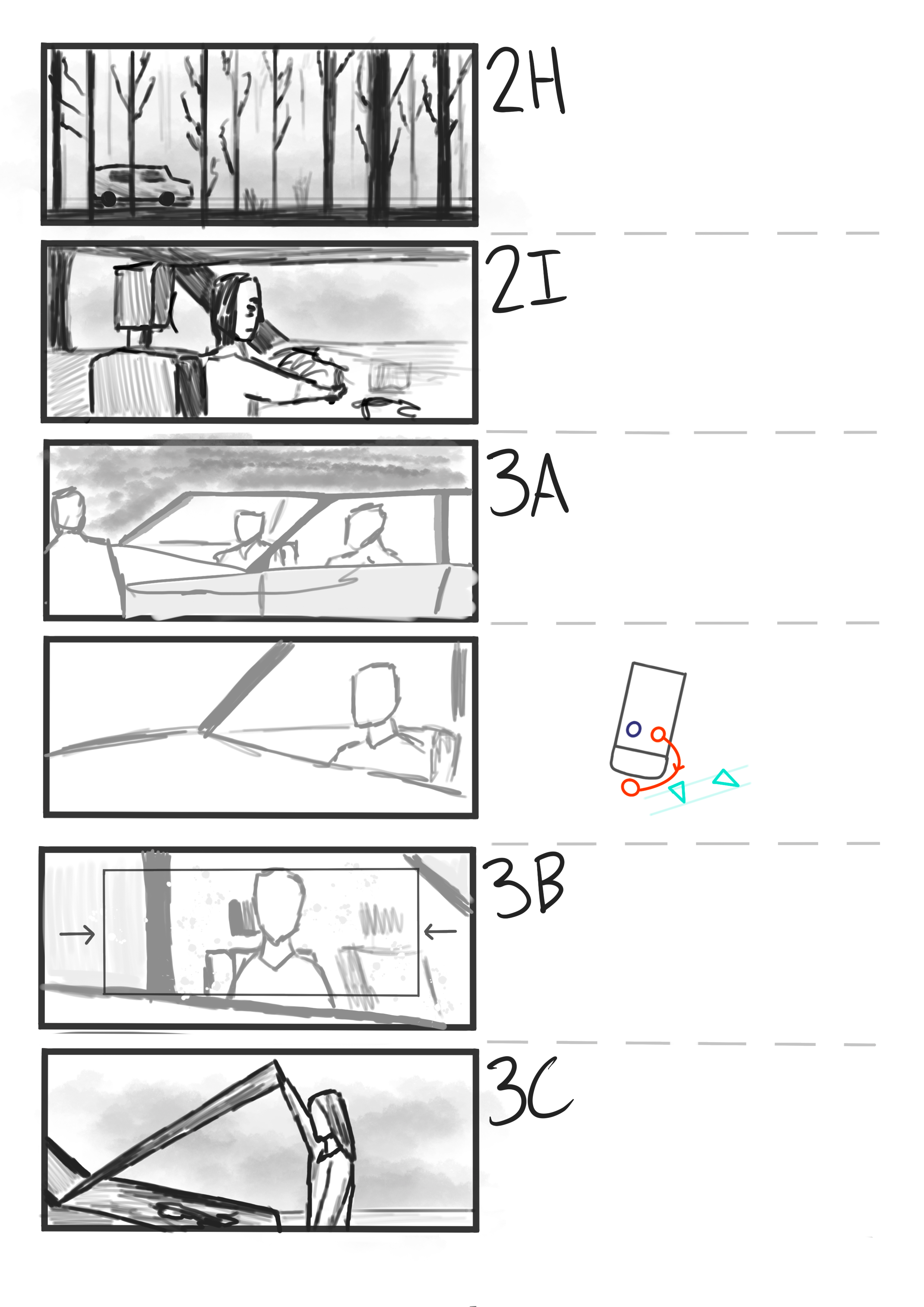
Initial storyboards revealed the scale of the task. Buzby wanted the night to feel oppressively dark - not hard to imagine on a rural upstate road, but capturing it would be a different story. I knew the lighting design had to make use of a small lighting package while keeping the balance between total darkness and visible moonlight. I took inspiration from the Tv Show 'Dark' and some of the exteriors in 'Longlegs': subtle, pale moonlight that didn't feel artificial. In a physics course about light at Syracuse I had learned about how the human eye reacts to darkness: our rods(responsible for "nighttime" vision) can't perceive color. In darkness, everything outside the center of vision is monochromatic. I wanted to take this principle of vision and apply it to this film: what's outside the character and the car is colorless and pale. My gaffer Kimmy Edelson hoisted a 4x4 silk up to use as a soft ambient moonlight, and an m18 deep in the woods to give some texture in the trees.
With sub-zero temperatures on the forecast we got more than just cold toes: lens caps were stuck to lenses, batteries ran painfully low, and we fought to keep morale high. Buzby's insistence on thorough pre-production made the shooting days far less cumbersome. The team of 15 of us shot for 3 nights, 8 hours per night in November 2024.
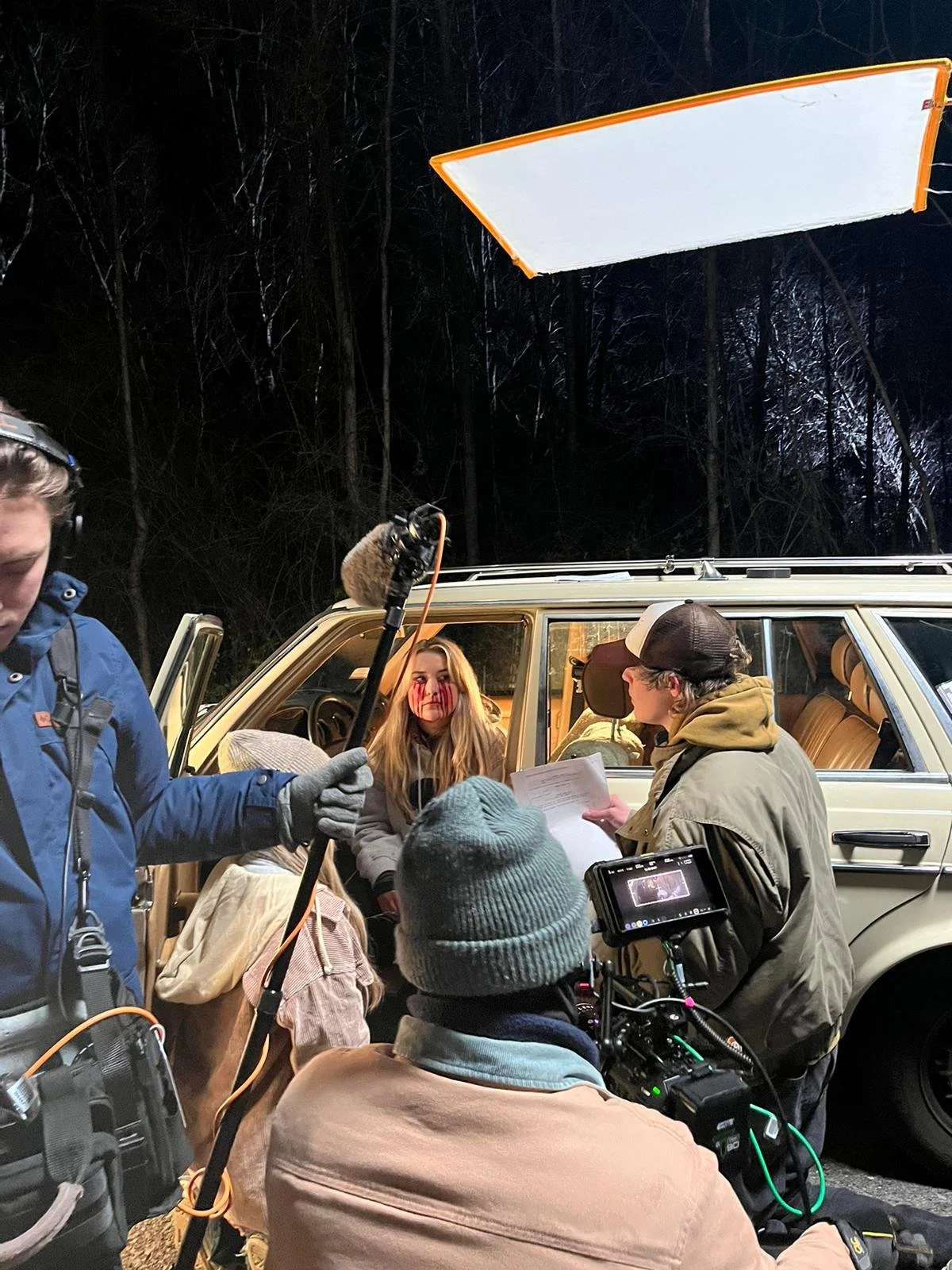
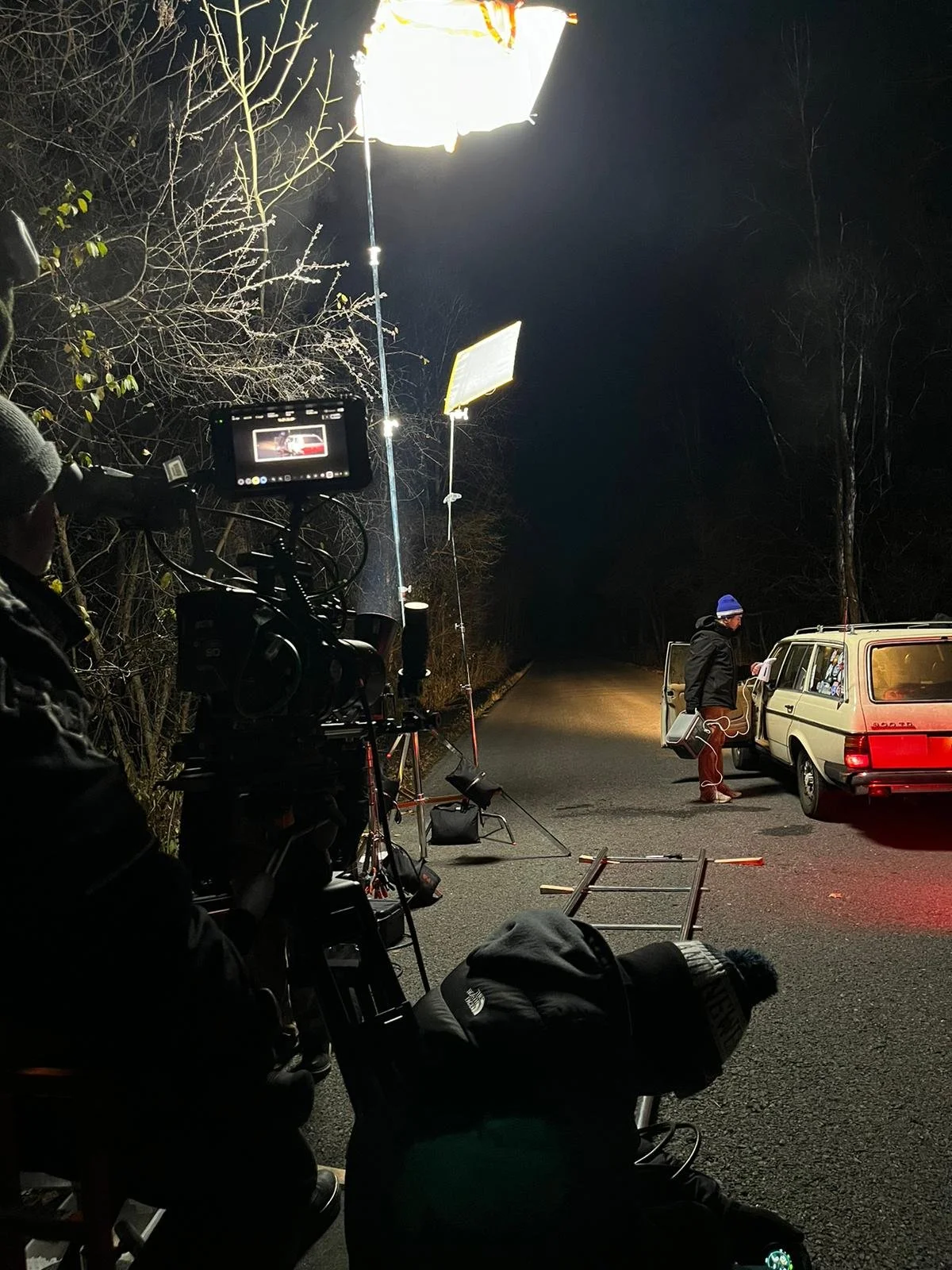
What I loved about the shoot was that it felt genuine. I have never shot on a volume or large green screen, but I can't imagine it gives the same chill down your spine as looking into the dark trees and letting your imagination run. Backlighting the leaf-less trees made the woods feel skeletal and menacing, like something was hiding just out of sight. There was a profound effect in showing what we wanted to see and leaving the rest in darkness.
The film was an exercise for me in naturalistic lighting and the subtlety to nighttime exteriors.
